If you spend most of your day sitting at a desk, your body can start to feel stiff in places you may not notice right away. Neck tension, rounded shoulders, a tired back, and tight wrists are common problems for people who work at a computer for hours. The good news is that you do not need a long workout or special equipment to feel better. A few simple stretches during the day can help reduce stiffness, improve comfort, and make it easier to stay focused.
Many desk workers assume that discomfort is just part of the job, but that does not have to be true. Small movement breaks can make a big difference when they become part of your daily routine. In this article, we will go through some of the best stretches for desk workers, organized by body area so they are easy to follow and remember.
Neck Stretches for Desk Workers
Neck Rolls
Neck rolls are a simple way to release tension after long hours of looking at a screen or leaning toward a laptop. Start by relaxing your shoulders and slowly moving your head in a gentle circular motion. Keep the movement smooth and controlled so you do not strain your neck. If your neck feels especially tight, move even more slowly and avoid forcing the stretch. This is a good stretch to do when you feel your head and upper body start to tighten up during a busy workday.
Side Neck Stretch
A side neck stretch helps loosen the muscles along the side of your neck and upper shoulders. Sit or stand upright, gently tilt your head toward one shoulder, and hold the position for a few seconds while breathing deeply. You should feel a mild stretch, not pain, so keep the pressure light and comfortable. This stretch can be especially helpful after long meetings, phone calls, or several hours of typing.
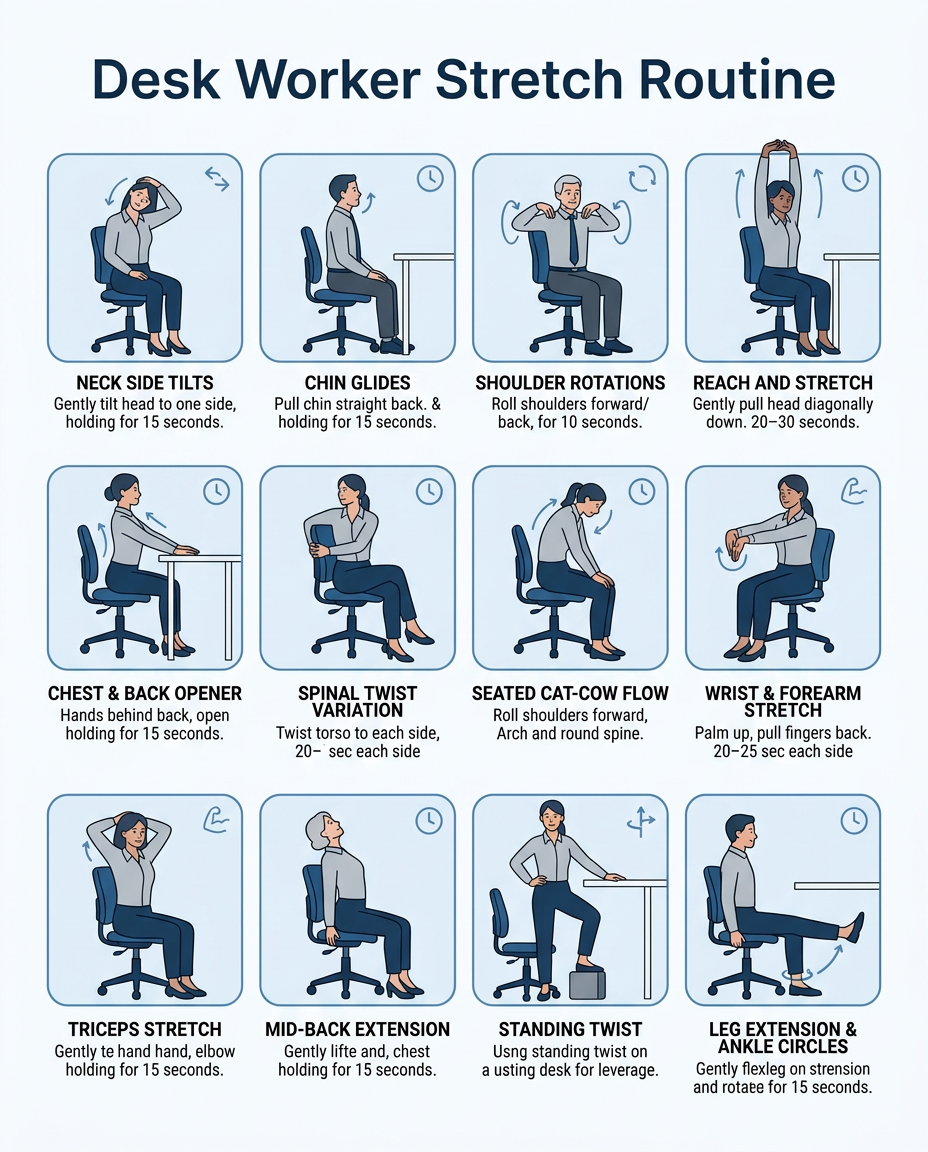
Chin Tuck
Chin tucks are one of the most useful stretches for desk workers because they help improve posture and reduce forward head position. Gently pull your chin back as if you are making a double chin, then hold the position for a moment without tilting your head up or down. This movement helps activate the muscles that support your neck and can be a great reset when you have been sitting too long. Practicing this often may help reduce the strain that builds up from looking down at a screen all day.
Shoulder Stretches for Desk Workers
Shoulder Rolls
Shoulder rolls are one of the easiest ways to release tension in the upper body. Lift your shoulders slowly toward your ears, roll them back, and then lower them down in a smooth motion. After a few repetitions, you can reverse the direction and roll them forward as well. This stretch is quick, simple, and easy to do even between tasks, which makes it a good choice for a short desk break.
Cross-Body Shoulder Stretch
This stretch is useful when your shoulders feel tight from typing, mouse use, or staying in one position too long. Bring one arm across your chest and use the opposite arm to gently hold it in place. Keep your shoulders relaxed and avoid pulling too hard, since the stretch should feel steady rather than intense. It is a small movement, but it can make your upper body feel much looser if you repeat it regularly.
Doorway Chest Stretch
A doorway chest stretch is excellent for opening up the chest and countering the rounded posture that often comes from sitting all day. Stand in a doorway, place your forearms or hands on the frame, and lean forward slightly until you feel a stretch across the front of your chest and shoulders. Hold the position while breathing slowly and keep your body relaxed instead of pushing too far. This stretch is especially helpful if you spend a lot of time hunched over a keyboard, tablet, or phone.
Back Stretches for Desk Workers
Seated Spinal Twist
A seated spinal twist can help improve mobility in your back and reduce stiffness from sitting too long. Sit upright in a chair, place one hand on the back of the chair or the opposite thigh, and gently twist your upper body to one side. Keep the movement slow and controlled so your spine can rotate without strain. This stretch works well as a quick break when your middle back or lower back starts to feel locked up.
Cat-Cow Stretch
Cat-cow is a classic stretch that helps loosen the spine and encourage gentle movement through the back. Start on your hands and knees, then alternate between arching your back upward and gently dropping it downward while matching the movement with your breathing. The motion may look simple, but it can feel very relieving after a long period of sitting. It also gives your whole back a chance to move in a natural way that desk work often does not allow.
Child’s Pose
Child’s pose is a calming stretch that gently relaxes the lower back and helps the body unwind. Kneel on the floor, sit back toward your heels, and reach your arms forward while letting your chest lower comfortably. You do not need to push yourself deep into the position; just find a version that feels restful and easy to hold. This is a great stretch to use at the end of the day when your back feels tired from sitting or bending forward too much.
Wrist and Arm Stretches for Desk Workers
Wrist Flexor Stretch
This stretch helps release tightness in the inner forearm and wrist area, which often gets overloaded from typing and desk work. Extend one arm in front of you and use the opposite hand to gently pull back the fingers. Keep the movement light and steady so you can feel a stretch without overdoing it. If you use a keyboard or trackpad often, this can be a very useful stretch to include in your routine.
Wrist Extensor Stretch
Wrist extensor stretches are especially helpful if your hands and forearms feel tired after a full day at the computer. Extend one arm and gently bend the wrist downward with the help of the other hand until you feel a mild stretch in the top of the forearm. Hold it for a few seconds and then switch sides. This simple movement can help balance out the tension created by repetitive hand motions and may make your wrists feel less stiff.
Forearm Stretch
A forearm stretch can reduce tightness caused by repeated mouse use, typing, and gripping throughout the day. Straighten your arm, keep your shoulder relaxed, and use the other hand to apply a gentle stretch along the forearm. The goal is to release tension gradually, not to force a deep stretch. Doing this regularly can help your arms feel less fatigued, especially if your work involves a lot of computer time.
How to Make Stretching a Habit
The best stretching routine is the one you can actually keep doing. You do not need to spend a long time stretching to feel the benefits, and you do not need to do every stretch at once. Even two or three minutes during a break can help reduce stiffness and make your body feel more comfortable.
A simple way to build the habit is to connect stretching with something you already do every day. For example, you can stretch after checking email, before lunch, or right after a meeting ends. If you make stretching part of your normal routine, it becomes much easier to remember and maintain. Over time, these short breaks can help you feel less tense and more refreshed throughout the day.
It also helps to listen to your body instead of trying to push through discomfort. If a stretch feels painful, stop and ease up. The goal is not to force your body into a certain position, but to give it a little relief from all the sitting and screen time.
Final Thoughts
Desk work can be hard on the body, but small stretches can make a real difference. Neck rolls, shoulder stretches, back movements, and wrist exercises all help reduce the tension that builds up from long hours at a desk. When you practice them regularly, you may notice better comfort, better posture, and less stiffness during the day.
The key is consistency, not perfection. A few simple stretches done often are usually more effective than one long session once in a while. If you work at a desk every day, adding these movements to your routine is one of the easiest ways to support your body and feel better while working.


